Pollutant reduction
Targets solids, organics, oils, colour and other process-specific contaminants.
Practical wastewater treatment planning for industries that need cleaner discharge, water recovery and dependable compliance support.
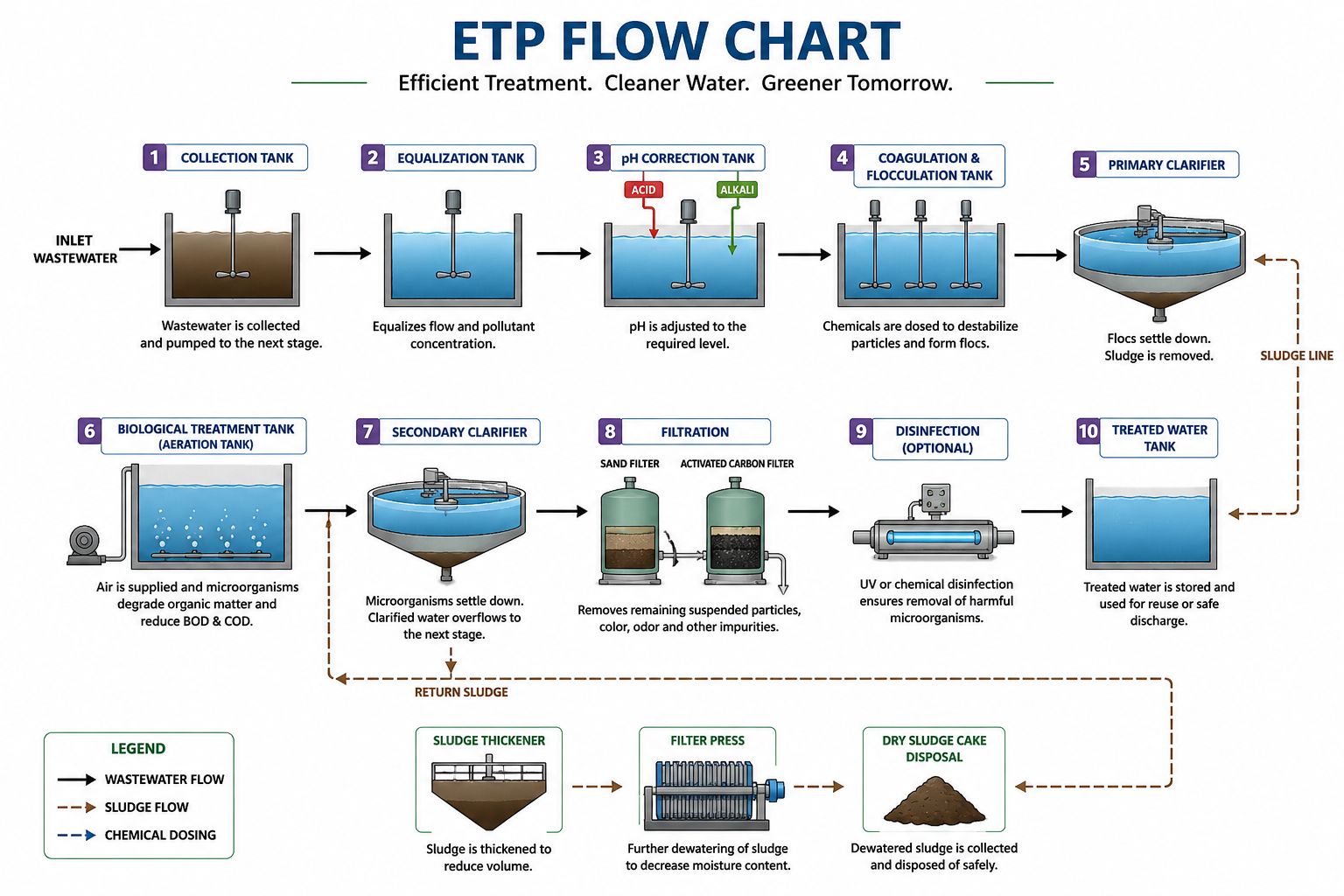
Manufacturing wastewater can carry suspended solids, oils, colour, chemicals, dissolved organics and other pollutants. An ETP brings these streams through a planned sequence of physical, chemical and biological treatment so the final water can be managed according to the applicable consent conditions and intended reuse or disposal route.
The right treatment train is not identical for every factory. It should follow the wastewater characteristics, production process, hydraulic load, desired outlet quality and site-specific regulatory requirements.
Targets solids, organics, oils, colour and other process-specific contaminants.
Creates opportunities for reuse where the treated quality and process allow it.
Supports operation around applicable consent and discharge requirements.
Focuses on practical equipment selection, monitoring and maintainability.
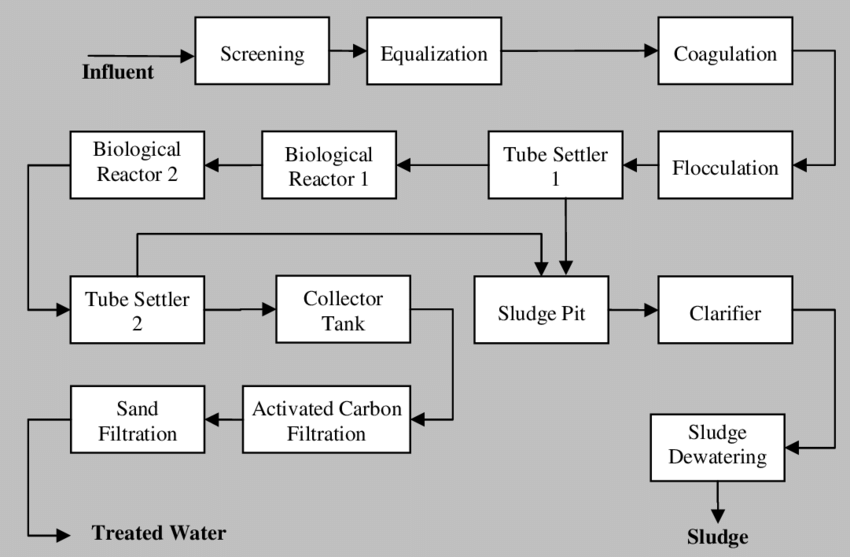
A typical ETP can combine screening, equalization, pH adjustment, chemical clarification, biological treatment, filtration and disinfection. Depending on the industry and target water quality, additional polishing such as membrane treatment may be required.
Large debris and coarse solids are intercepted first. The screened wastewater is collected and transferred forward without allowing avoidable clogging or equipment damage.
Flow and pollutant fluctuations are buffered in an equalization stage, helping downstream units receive a more consistent feed and reducing shock loading.
Acidic or alkaline wastewater can be adjusted into the operating range required for the following treatment steps. Chemical dosing is controlled to suit the process.
Coagulants and, where appropriate, flocculants help destabilize fine particles and form larger flocs that can be separated more effectively.
Settling separates the formed solids from the liquid phase. The collected sludge is routed for further handling rather than carried into later treatment.
Where biodegradable organic load is significant, aerated biological treatment uses microorganisms to reduce organic pollutants and improve the quality of the clarified water.
Biological solids are separated from the treated liquid, with suitable sludge return or wasting arrangements depending on the selected process.
Sand or multimedia filtration and activated carbon treatment may be used to reduce remaining suspended matter, colour, odour or other residual impurities.
UV or chemical disinfection can be included when microbiological control is required for the intended reuse or discharge route.
Treated water is stored, reused or discharged as permitted. Sludge is thickened, dewatered and managed through an appropriate disposal or recovery route.
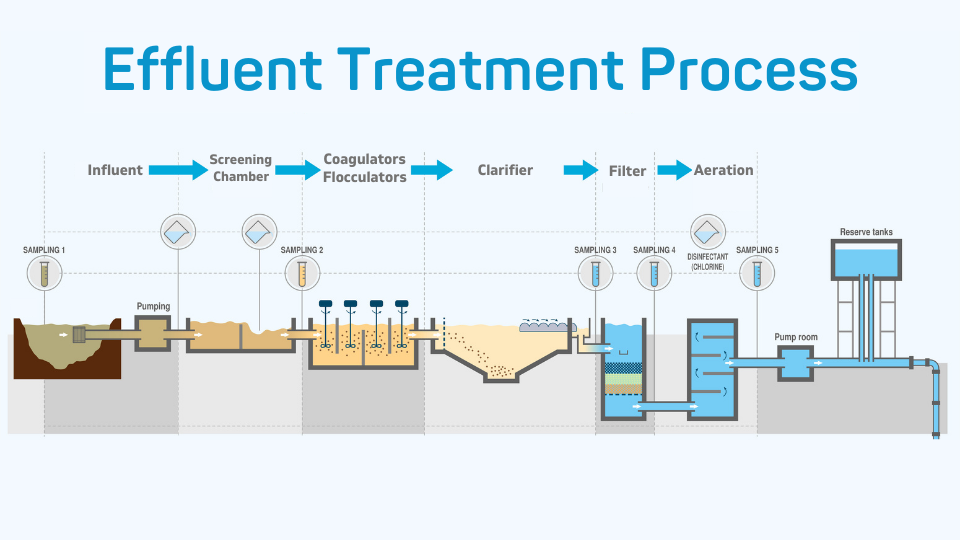
The treatment path below illustrates the movement from incoming industrial effluent through screening, chemical treatment, clarification, biological treatment and final polishing.
Textile, pharmaceutical, food, chemical, engineering and other industries can have very different wastewater profiles. The process should be selected around the actual stream rather than a one-size-fits-all package.
Useful operating checks can include flow, pH, dissolved oxygen where biological treatment is used, sludge condition and laboratory parameters relevant to the consent and process.
Where technically and legally suitable, treated effluent can support industrial reuse, cooling, washing or other applications, reducing dependence on fresh water.
Treatment performance depends on the complete system: wastewater characterization, process selection, hydraulic arrangement, chemical dosing, aeration, filtration, sludge handling, instrumentation, operator practices and ongoing testing.
India's environmental framework includes industry-specific effluent standards and consent conditions. The final outlet criteria should therefore be confirmed for the particular industry, process and disposal or reuse route rather than relying on one generic number.
CPCB resourcesShare your industry, approximate flow, existing treatment setup and intended reuse or discharge requirement.